ORLANDO (The Borowitz Report)—Donald J. Trump will use his speech at the Conservative Political Action Conference this weekend to announce that he has won the 2024 Presidential election.
Trump will further state that any attempt to allege that the year 2024 has not arrived yet and is, in fact, not scheduled to occur until three years from now is “a rigged hoax.”
“This should never be allowed to happen in our country,” he will assert.
Asked whether he would support Trump’s contention that the year 2024 is not three years away, Mitch McConnell, the Senate Minority Leader, said, “If he said that? Of course.”
Serious bushfires are becoming more frequent in south-west Western Australia
The increased frequency of serious fires is linked to a drying trend in the region
Droughts and bushfires are increasing in Mediterranean climates around the world
Flames and smoke rise from the massive Wooroloo bushfire, as seen from a property in Bullsbrook.(Supplied: Rachael Harpley)
In the wake of the recent Wooroloo bushfires in Western Australia, fire experts have warned a long-term reduction in rainfall in the state’s south-west is making blazes there worse.
Key points:
Serious bushfires are becoming more frequent in south-west Western Australia
The increased frequency of serious fires is linked to a drying trend in the region
Droughts and bushfires are increasing in Mediterranean climates around the world
“I think serious fires have become more frequent,” said Murray Carter, executive director of the Rural Fire Division in WA’s Department of Fire and Emergency Services (DFES).
“Those which you characterise as causing damage to property or worse, human fatality, which we obviously don’t want to see.
“Two decades ago we would’ve had those fires maybe once every five or six years, now we get them every two or three.”
Hundreds of firefighters battled the massive Wooroloo bushfire east of Perth, February 3, 2021.(Supplied: DFES/Evan Collis)
Fire season extending as winter rains shrink
According to the Bureau of Meteorology, the south-west corner of Western Australia has seen a 20 per cent reduction in winter rainfall since the 1970s due to climate change.
Much of the decline in rainfall has occurred during the autumn and early winter months (April to June), according to Lachie McCaw, the principal research scientist with WA’s Department of Biodiversity, Conservation and Attractions (DPCA).
“It means that dry conditions, conducive to fire ignition and spread, may persist for the first half of the year,” he said.
“Fire seasons are extending longer into the autumn and in some years are beginning a month or more earlier than was typically the case a decade or two ago.”
Dr Lachie McCaw is says the fire season in south-west Western Australia is becoming longer.(ABC RN: Fiona Pepper)
Dr McCaw said a shorter, drier winter rainy season was leading to drier, more combustible fuels in the summer fire season.
“When warmer conditions return during the spring, large dead woody material ignites readily,” he said.
He said declining autumn rains were extending the fire risk into winter.
“We have experienced several events of widespread bushfire activity in late May and early June in the last few years,” Dr McCaw said.
“These events have resulted from the coincidence of persistent dry fuels conditions and strong pre-frontal winds associated with early winter cold fronts.”
This summer, parts of south-west Western Australia had above average fire potential due to dry conditions.(Supplied: Bushfire And Natural Hazards CRC)
Drying trend a worldwide phenomenon
The drying trend in south-western Australia is part of a pattern of reductions in winter rains around the world, according to Pandora Hope, a climatologist with the Bureau of Meteorology.
She said the trend has been affecting temperate regions which have wet winters and dry summers — the so-called Mediterranean climates.
“We’ve seen similar declines in southern Africa and South America,” she said.
Chile experienced what became known as the megadrought over the past decade, with a 30 per cent reduction in rainfall there.
The Western Cape region in South Africa has recently recovered from the Day Zero drought that saw Cape Town nearly run out of drinking water in 2018.
Firefighters work trying to control flames in Valparaiso, Chile, in 2017.(AP: Luis Hidalgo)
Dr McCaw said there was a global pattern of increased fire activity in Mediterranean climates.
“Looking back over the past five years, there have been damaging bushfires in the western US, Chile, South Africa and Mediterranean European countries including Greece, Portugal and Spain,” he said.
“The south-west of WA has also experienced some damaging bushfires, most recently at Wooroloo and also at Yarloop in January 2016.”
Climatologists believed the drying trend in these Mediterranean climates was being partly driven by winter storms tracking further south, due to the effects of climate change.
“As you get an expansion in the tropics and more high-pressure systems over the region, it just makes it that much harder to rain,” Ms Hope said.
“There are changes to the fronts that come across the region that normally bring rainfall; we’re seeing a decline in the number of them, but also decline in the amount of rainfall that comes from them.”
Climatologists have linked south-western Australia’s drying trend to an expansion of the subtropical ridge.(Supplied: Bureau Of Meteorology)
Adapting to more fire
Mr Carter said West Australians could adapt to the changes by being more proactive.
“We talk a lot about community resilience, but we also need to talk about landscape resilience, and that’s about using fire in the landscape,” he said.
Dr McCaw said the biggest fire threat in south-western Australia was from large-scale, high-intensity bushfires burning during the summer dry season.
“Attempting to exclude fire on a broad scale will lead inevitably to this outcome and put the community and the environment at significant risk,” he said.
“The approach that continues to be used in WA by the Department of Biodiversity, Conservation and Attractions, Parks and Wildlife Service is to use fire wisely through prescribed burning.”
February 23, 2021 — 6.36pmSaveShareNormal text sizeLarger text sizeVery large text size
A flesh-eating disease affecting parts of coastal Victoria has spread to inland Melbourne for the first time, with several cases reported in Essendon, Moonee Ponds and Brunswick West.
Victorian Chief Health Officer Brett Sutton said on Tuesday that the risk of acquiring the ulcer in those areas was considered low, but “this is the first non-coastal area in Victoria to be recognised as a potential area of risk”.
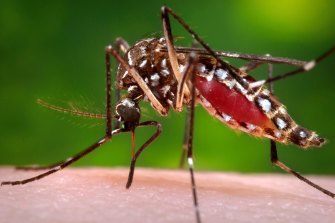
Scientists believe mosquitoes are are part of the transmission chain that connects the Buruli ulcer to humans. CREDIT:REUTERS
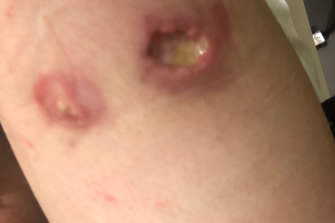
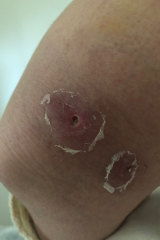
“Lesions typically present as a slowly developing painless nodule or papule which can initially be mistaken for an insect bite. They can progress to a destructive skin ulcer, which is known as Buruli ulcer or Bairnsdale ulcer.”Advertisement
Internationally renowned Buruli ulcer expert Paul Johnson said what was significant about the latest cases was that it appeared the bacterium had been acquired in the inner and north-western suburbs of Melbourne.
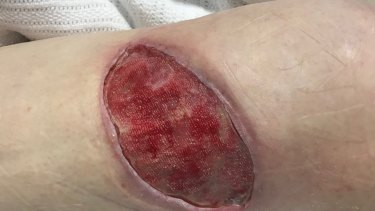
Buruli ulcer on a patient’s arm.
“People in places like West Brunswick and Moonee Ponds have had it before, but nobody has really thought that they actually got it there,” Professor Johnson said.
“It has always been thought they’ve got it down the beach like everybody else does, but this time we know that they did get it there. We are absolutely certain that there is a little bit of local transmission, not very much, but in those suburbs as mentioned by the Department of Human Services.”
It is not known how people become infected, although it’s increasingly thought mosquitoes play a role in transmission.
The bacteria had also been detected in the faeces of a local possum in Essendon, in Melbourne’s inner north, but the source had not yet been established.
“While humans go on holiday possums don’t, so we now know that [the bacterium] is now there beyond reasonable doubt,” Professor Johnson said.
“What is different this time, also, is that as well as having people who think they’ve got it locally, we’ve also identified a possum that had to be euthanised that had Buruli ulcer. We’ve been able to use sequencing to show that the human and the possum are linked.”
The disease is not transmissible from person to person, and there is no evidence of transmission between possums and humans, the Health Department said.
A previous Buruli ulcer case in a Seddon resident.
If left untreated, the ulcers can require surgery or lead to amputation in extreme cases.
Ulcer cases had been concentrated on the Mornington and Bellarine peninsulas. Rye, Blairgowrie and Sorrento are among the highest risk areas, and the disease had also been found in concerning levels in places such as Ocean Grove, Barwon Heads, Frankston and Seaford.
In 2020, five cases of Buruli ulcers were reported in the Moonee Valley area, compared to eight in 2019 and 10 in 2018.
There remains some uncertainty about what causes the skin infection, but scientists believe mosquitoes and possums are likely spreaders of the bacteria, resulting in human infections.
To protect against the ulcer, people are advised to avoid insect bites, wear gardening gloves and protective clothing and reduce mosquito breeding sites around houses. Cuts and abrasions should always be cleaned promptly following outdoor activities.
Doherty Institute microbiology professor Tim Stinear said genomic testing had been conducted on a possum handed in to wildlife carers in the Essendon area.
The tests confirmed the animal carried the bacteria. He said tests of possum faeces in the area had also shown evidence of the disease.
“When you have possums that carry the bacteria and more than one case in humans you have good evidence of local transmission,” he said.
Professor Stinear said it was worrying the disease was spreading to new areas but early diagnosis and antibiotics enabled the condition to be treated effectively.
Professor Johnson said while the new cases were of concern there was no need to panic.
All Skin lesions – red patches, ulcers or lumps – that don’t heal should be assessed by a doctor and tested for Buruli ulcer.
“The purpose of the health alert is to draw the attention of local doctors and the public to it, not to cause panic because it’s actually quite a slow moving disease,” he said.
“It’s not a massive increase in cases, it’s just a definite change in the epidemiology that we need to monitor closely.”
Updated February 23, 2021 — 10.01amfirst published at 7.41amSaveShareNormal text sizeLarger text sizeVery large text size
Cape Canaveral: NASA on Monday released the first high-quality video of a spacecraft landing on Mars, a three-minute trailer showing the enormous orange and white parachute hurtling open and the red dust kicking up as rocket engines lowered the rover to the surface.
The quality was so good — and the images so breathtaking — that members of the rover team said they felt like they were riding along.PlayMuteCurrent Time 0:08/Duration 1:43Loaded: 48.30% FullscreenFirst video of Perseverance landing on Mars
NASA released the first video ever of its rover Perseverance landing on the surface of Mars.Hoarding situation at Waterford home leads to removal of over 40 cats
“It gives me goosebumps every time I see it, just amazing,” said Dave Gruel, head of the entry and descent camera team.
The Perseverance rover landed last Thursday near an ancient river delta in Jezero Crater to search for signs of ancient microscopic life. After spending the weekend binge-watching the descent and landing video, the team at Jet Propulsion Laboratory in Pasadena, California, shared the video at a news conference.
“These videos and these images are the stuff of our dreams,” said Al Chen, who was in charge of the landing team.
“Seven minutes of terror” is a phrase used by scientists to describe the touchy phase of a spacecraft’s plunge through a planet’s atomosphere before coming safely to rest on its surface.
Six off-the-shelf cameras were devoted to entry, descent and landing, looking up and down from different perspectives. All but one camera worked. The lone microphone turned on for landing failed, but NASA got some snippets of sound after touchdown: the whirring of the rover’s systems and wind gusts.
Flight controllers were thrilled with the thousands of images beamed back — and also with the remarkably good condition of the rover. It will spend the next two years exploring the dry river delta and drilling into rocks that may hold evidence of life 3 billion to 4 billion years ago. The core samples will be set aside for return to Earth in a decade.
NASA added 25 cameras to the $US3 billion mission — the most ever sent to Mars. The space agency’s previous rover, 2012’s Curiosity, managed only jerky, grainy stop-motion images, mostly of terrain. Curiosity is still working. So is NASA’s InSight lander, although it’s hampered by dusty solar panels.
Watching the video “I think you will feel like you are getting a glimpse into what it would be like to land successfully in Jezero Crater with Perseverance,” he said.
Thomas Zurbuchen, NASA’s science mission chief, said the video and also the panoramic views following touchdown “are the closest you can get to landing on Mars without putting on a pressure suit.”
The images will help NASA prepare for astronaut flights to Mars in the decades ahead, according to the engineers.
There’s a more immediate benefit.
“I know it’s been a tough year for everybody,” said imaging scientist Justin Maki, “and we’re hoping that maybe these images will help brighten people’s days.”
Researchers will lay thousands of mosquito traps in coastal and bayside areas to curb the spread of a flesh-eating disease that is appearing in parts of Victoria where it has not previously been recorded.
There has been an alarming rise in Buruli ulcer cases in recent years and scientists believe that mosquitoes and possums are spreading the bacteria, resulting in human infections.
Symptoms of the Buruli ulcer disease range from mildly inflamed mosquito bites to large open ulcers that can cause immobility and result in amputation in the most extreme cases.
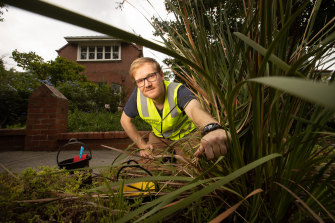
Researcher Peter Mee placing a mosquito trap that is being used in a research project to prevent the spread of the flesh-eating Buruli ulcer disease. CREDIT:SIMON SCHLUTER
Researchers are concerned 2021 is off to a bad start with 21 cases confirmed so far this year, compared to 12 for the same period last year.Advertisement
The Doherty Institute is working on a research project with the Mornington Peninsula council and other state government departments, distributing mosquito traps to 250 households in Rye and Blairgowrie.
The researchers want to know whether a reduction in mosquito numbers will result in fewer cases.
Doherty Institute microbiology professor Tim Stinear said the study would be extended to the Frankston and Bayside council areas.
The traps, which will also be placed on public land, are the size of a pot plant and attract female mosquitoes but prevent their eggs from hatching.
Cases of the disease are most prevalent on the Bellarine and Mornington peninsulas but continuing infections have been recorded in Melbourne suburbs – particularly bayside areas.
Rye on the Mornington Peninsula is a Buruli ulcer hot spot. CREDIT:SIMON SCHLUTER
Professor Stinear said the disease appeared to be spread by mosquitoes in about 80 per cent of cases but exposure to soil contaminated by possum faeces may also be contributing.
“This is the reality that we’re going to see more examples of what we call zoonotic infections where they jump from animals to humans or humans to animals,” he said.
“You need a puncture injury to introduce the bacteria under the skin. It’s not spread person to person, it’s an environment-to-person spread.”
There were just 24 cases of Buruli ulcer recorded in 2004 when it became mandatory for health professionals to report infection numbers to the Department of Health.
Last year there were 218 cases of the disease in Victoria, down from 299 the year before and 340 in 2018.
But Professor Stinear said Victoria’s extended lockdown in 2020 most likely contributed to the decrease in cases last year and the trajectory of the disease was going up.
He said the increasing population in Victoria’s coastal areas was likely to add to the rise in cases.
“As our population becomes more urbanised or we create these bigger centres and displace native animals we’ll see more of these sorts of events.”
Professor Stinear stressed the research project aimed to reduce mosquitoes rather than eliminating them entirely.
The researchers originally planned to use a spray but had to scrap that after a backlash from the community on the Mornington Peninsula.
Barwon Health acting director of infectious diseases Daniel O’Brien said cases had been recorded in new places in recent years, including Aireys Inlet and the Geelong suburb Belmont.
The incubation period for the disease is typically about four months with infections most commonly acquired in the warmer parts of the year but presenting from May to October.
Donald Cottee’s ulcer grew to more than 10 centimetres after he was bitten by a mosquito almost a year ago.
Barwon Heads resident Donald Cottee is still recovering from the disease almost a year after becoming infected.
A neighbour who is a registered nurse advised he see a doctor after a mosquito bite started weeping. He was put on a course of antibiotics but said they were not strong enough.
“I ended up having to go to hospital and go on a drip,” he said.
The ulcer ended up covering a patch on his thigh measuring about 10 centimetres. A case of polio as a child has caused added complications for Mr Cottee whose mobility was affected by the Buruli ulcer.
“I had to have surgery a couple of times to clean it all out and have skin grafts.”
Agriculture Victoria research scientist Peter Mee said the traps would be laid along fences outside residential properties for two weeks to monitor mosquito population sizes and then moved inside those properties for another month to reduce mosquito numbers.
“The program is based on using sustainable, non-toxic mosquito traps, which have been used around the world to reduce mosquito populations,” he said.
Former prime minister Kevin Rudd has argued proposed laws to force Google and Facebook to pay media companies for their news content will entrench the power of Rupert Murdoch’s News Corp empire in the Australian media landscape.
Mr Rudd, who has become a strident critic of News Corp since leaving politics, used an appearance at a Senate inquiry into media diversity to compare the news ban imposed by Facebook on media companies to the dominance of News Corp in the print media market.
Nothing to do with the economy, nothing to do with policy, nothing to do with education, nothing to do with health, nothing to do with the welfare of Australia’s citizens, nothing to do with a positive attitude, nothing to do with an issue he is prepared to stick with, nothing to do with anything of value!
And everything to do with wanting to become Prime Minister, at any cost, and without a policy that he will not contradict the next day! In short, all to do with appearance!
Beware Australia, lest our citizens vote for this stupid, ignorant, dolt of a man!
——————————————————-
Abbott may roll out ‘secret weapon’ again
Date October 6, 2012 – 1:14PM
Heath Aston
On standby … Opposition Leader Tony Abbott with his wife Margie. Photo: Alex Ellinghausen
Margie Abbott will be used again in future to blunt Labor’s attacks on her husband as being anti-women, the opposition leader, Tony Abbott said today.
”If the Labor Party persist in this idea that there’s some kind of problem with women Margie will be out there correcting the record again,” Mr Abbott said.
With polls showing Labor’s characterisation of the opposition as anti-women had struck a chord with the electorate, Mrs Abbott this week hit the press and the airwaves with the message that Mr Abbott, a father of three grown daughters, was surrounded by ”strong, capable women”.
She also delivered a rare speech in his defence.
Mr Abbott was today asked whether his normally private wife was his new ”secret weapon” in the run into the next election.
”I don’t call Margie my better half for nothing and I suspect that there will be a few people who say ‘yay, Margie for PM’ after yesterday.
“She’s not a political person, she’s married to a politician but I think she felt that there had been some untruths put into the public arena and she thought it was important to correct the record.”
Mr Abbott predicted the anti-women line would be kept up by Labor, saying he expected a ”destructive, negative, personal campaign”.
Australia, as I understand it, is home to 8 out of the top 10 deadliest snakes in the world.
We truly are the lucky country.
———————————————-
Mystery over boy bitten by world’s most venomous snake
Date September 27, 2012 – 12:05P
Stephanie Gardiner
Inland taipan bites boy
A teenager has been bitten by the world’s most venomous snake in Kurri Kurri, near Maitland, 1000 kilometres from its usual habitat.
A single drop of venom from the inland taipan can kill 100 men and quickly cause paralysis and haemorrhaging, but a Hunter Valley teenager has survived a rare bite from the world’s deadliest snake.
Police are investigating how the 17-year-old came across the snake in Kurri Kurri, more than 1000 kilometres from its natural habitat in arid ground in the far west of NSW.
The boy took himself to the emergency unit at Kurri Kurri Hospital yesterday with a bite on his left hand, police said.
World’s most venomous snake – the inland taipan. Photo: Dallas Kilponen
The snake was also brought to the hospital and wildlife workers identified it as the inland taipan.
The boy was later taken to the Calvary Mater Hospital in Newcastle, where he was in a serious condition this morning.
Although he spoke briefly to police last night, his health remains a concern for specialists as the poison continues to wrack his body, The Newcastle Herald reported.
The inland taipan is known colloquially as a “fierce snake”, reaches up to 2.5 metres in length and is native to western NSW, south-eastern South Australia and southern parts of the Northern Territory.
A drop of venom can kill 100 adult men and 250,000 mice, Taronga Zoo spokesman Mark Williams said.
Australian Reptile Park’s head keeper of reptiles and spiders Julie Mendezona said the snake’s venom is a neurotoxin that acts quickly.
“Effectively what it will do is it will start shutting down the function of messages going to your brain, to your vital organs, your lungs and your heart and even your muscles.
“So paralysis is usually what happens with the patient.
“Because it can act so fast, being a neurotoxin, that’s what makes it such a deadly animal.
“It can kill someone within maybe 45 minutes. There have been reports of people experiencing effects of venom within half an hour as well.
“It also contains an anticoagulant, which means it will interfere with the blood clotting, so therefore you can experience bleeding out as well.”
Ms Mendezona said bites were quite rare because the snake’s native areas were not highly populated.
The teenager’s bite is probably one of about 100 in Australia’s history, she said.
“It’s not known yet as to how the young man actually got hold of the snake. We can only speculate.
“You can actually keep venomous snakes under the correct licence.
“But a 17-year-old boy would not have the correct licence at all so he shouldn’t have been touching it.
“You could probably speculate it was an illegal pet, but we can’t know for sure at this stage.”
Mr Williams said there were no recorded deaths from a inland taipan bite.
“Like any animal if confronted … it will defend itself,” he said.
Antivenom for inland taipan bites is kept at zoos that keep them, as well as hospitals near where the snake is found in the wild.
Other deadly snakes in Australia include the eastern brown snake, coastal taipan and eastern tiger snake.
Police do not believe the incident is related to a break-in at Hunter Valley Zoo on Sunday night where thieves stole four pythons and two alligators.


 Photograph by Chip Somodevilla / Getty





 On standby … Opposition Leader Tony Abbott with his wife Margie. Photo: Alex Ellinghausen
 World’s most venomous snake – the inland taipan. Photo: Dallas Kilponen
 da Don's blog